

Artificial Intelligence & Intelligent Business Processes

Enterprise Data Processing | Artificial Intelligence & Intelligent Business Processes

We build data pipelines that extract, classify and report information from unstructured documents and data.

Enterprise Data Processing – image 1
Enterprise Data Processing – image 2

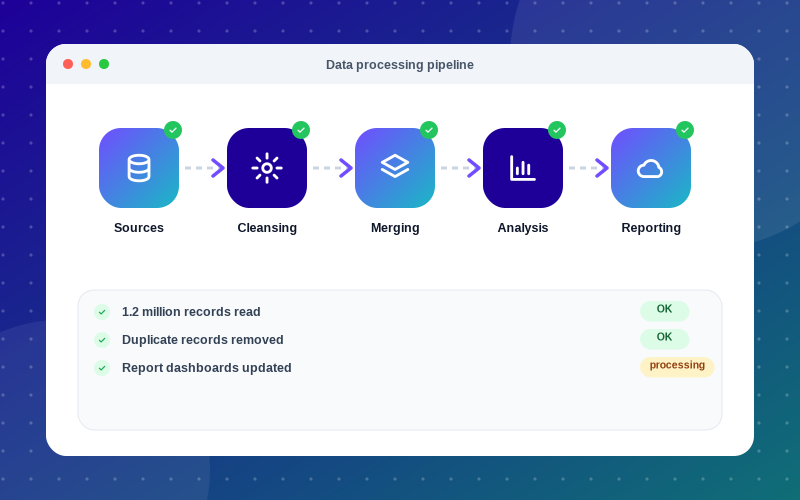
We build data processing pipelines that extract information from, classify and report on unstructured documents such as invoices, contracts, forms and e-mails. Deliverables are a working pipeline, validation rules and reporting outputs.

From documents to structured data

Most of an organisation's knowledge sits in formats such as PDFs, scanned images, Word files and e-mails and is re-keyed by hand. Using optical character recognition, layout analysis and language models, we read these documents, extract fields such as amounts, dates, party names and line items, and convert them into clean records that your ERP, accounting or quality system accepts.

Classification, tagging and routing

Automatically determining the type, subject and urgency of an incoming document ensures it reaches the right department or person. According to your own classification scheme, we assign document type, confidentiality level and relevant process tags, and route uncertain cases to human review. This keeps the archive orderly and noticeably improves searchability.

Data quality, validation and reporting

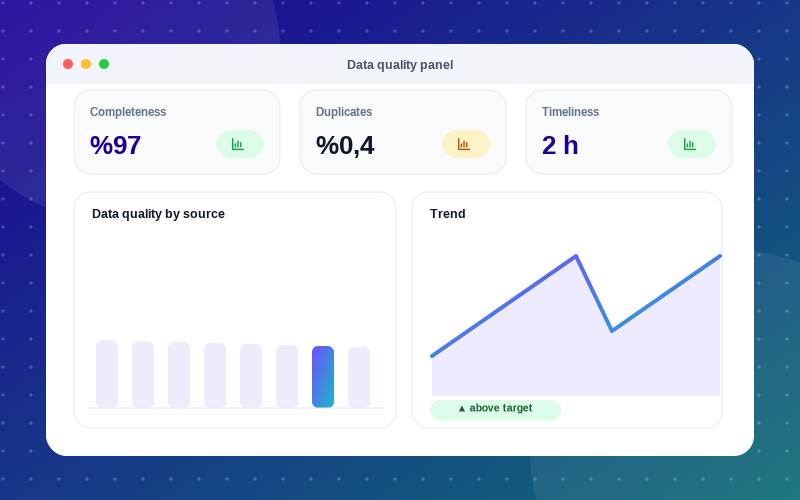
The reliability of extracted data is the most critical condition for automation. We generate a confidence score for each field and validate with business rules such as a match between total amount and line-item sum, a valid tax-number format or duplicate detection. Results feed reports and dashboards showing records that need correction and processing statistics, so that misreads become measurable and traceable.

What is included?

  • Document reading: We set up reading components that recognise text, tables and signature areas in scanned and digital documents and adapt them to different templates and languages.
  • Field extraction: We extract fields such as amount, date, party, reference number and line items according to document type and attach a confidence score to each field.
  • Classification and tagging: We sort documents into types, departments and confidentiality levels according to your scheme and route unclear ones to human approval.
  • Validation rules: We define business rules such as amount consistency, mandatory fields, format checks and duplicate detection, and place faulty records in a separate queue.
  • Reporting and transfer: We pass the extracted data to the target system and prepare reports and dashboards showing processing volume, error rate and correction times.

How we work

  1. Discovery

    We collect your document types, sample files, current manual entry process and target-system fields, and together select which document to start with based on volume and manual handling effort.

  2. Planning

    We design the reading, extraction and classification flow, write the field schemas and validation rules, and set the confidence threshold below which records go to human review.

  3. Implementation

    We run the pipeline on real document samples, measure accuracy by comparing against manually entered reference records, and analyse errors to improve the rules and components.

  4. Support

    We take the pipeline into production, introduce users to the correction screen and activate the reports; we provide maintenance and improvement support for new document types and template changes.

What you gain

Time spent on manual data entry and checking falls markedly, and teams focus on exceptions and analysis instead of repetitive typing.

Documents gain consistent fields and tags, strengthening search, reporting and audit trail, and the same information is no longer kept in different forms in different places.

Because error and correction rates are measured, the quality of the process becomes visible, and data problems are noticed when they arise rather than at month end.

Who is it for?

This service is for accounting, purchasing, human resources, logistics and quality teams that process large numbers of invoices, orders, contracts, application forms or e-mails every day and enter them manually into systems. Organisations of any size that want to tidy their document archive, measure data quality or automate reporting can benefit from it.

Frequently Asked Questions

Can scanned or handwritten documents also be processed?

Scanned documents are processed without difficulty if the scan quality is adequate. For handwriting, accuracy varies with writing style and legibility; we therefore run a preliminary test on real samples and route low-confidence fields to human review. We share measured results rather than promising a fixed success rate.

Do the extracted data and documents leave our organisation?

This depends on the architectural choice. For sensitive documents the pipeline can run on your own servers or in a private cloud, in which case documents do not leave your environment. If an external service is used, the fields to be sent, masking and retention conditions are defined in writing in advance according to your data policy.

Related services and resources

Quote & demo

Let's evaluate your project together.

Let's start with a short call about QISO demo, ISO consulting, Artificial intelligence feasibility or your custom software needs.

  • QISO demo
  • ISO consulting
  • Artificial intelligence
  • Custom Software