

IT Infrastructure Services

DNS Management | IT Infrastructure Services

We manage your domain name and DNS records correctly and securely.

DNS Management – image 1
DNS Management – image 2

We inventory and organise your domain names and DNS records, log every change, plan migrations without interruption and resolve name resolution problems at their root cause, delivering an up-to-date record inventory and a change procedure.

Record inventory and change tracking

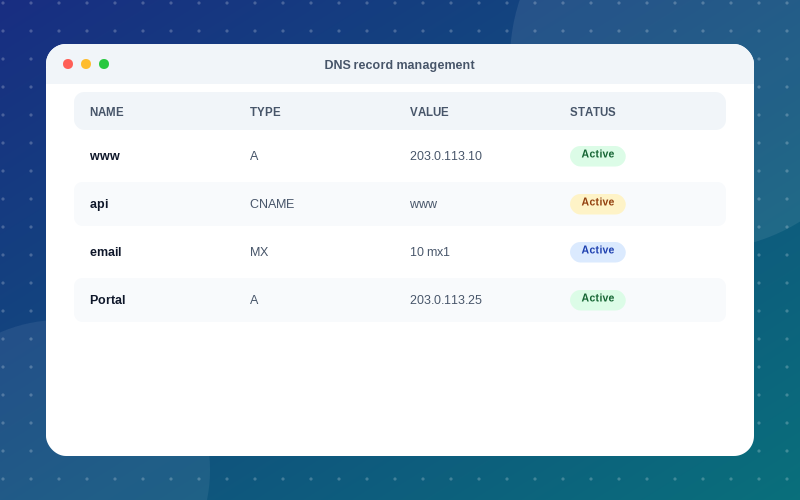
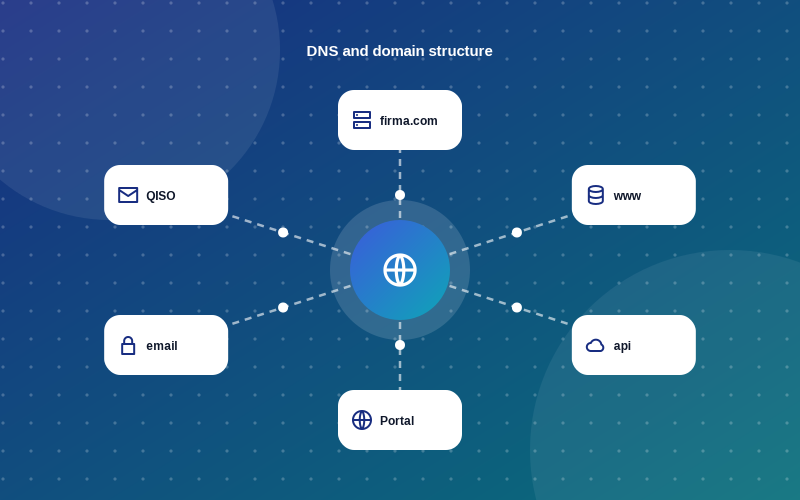
Over the years an organisation's DNS zones fill up with abandoned test records, old server addresses and subdomains with unclear owners. We list all your domain names, registrar accounts and A, AAAA, CNAME, MX, TXT and NS records, note the owner and purpose of each, clean out unused ones, and define an approved logging and rollback procedure for changes.

Security and registrar accounts

Losing control of a domain means losing email and the website together. We check registrar accounts for multi-factor authentication, domain lock, up-to-date contact and authorised persons, and expiry tracking. Where appropriate we also assess DNSSEC, CAA records and scanning for subdomain takeover through dangling CNAME records.

Migration planning and problem analysis

When a website, email or application moves to another provider, the order of the DNS cutover determines the disruption. We lower TTL values in advance, prepare the new records in parallel, verify the switch and remove old records afterwards. For names that do not resolve, propagation delays or wrong redirections, we analyse step by step using dig and nslookup output.

What is included?

  • Domain and zone inventory: All domain names, registrar accounts, name servers and zone records are listed together with owner and purpose information.
  • Record and change management: A change procedure covering approval, logging and rollback steps for adding, removing and updating records is written.
  • Security review: Registrar accounts, domain lock, authorised contacts, expiry, DNSSEC and CAA records, and dangling records are checked.
  • Migration planning: A cutover plan covering TTL, record order and verification steps is prepared for hosting, email or provider changes.
  • Problem analysis: Root cause analysis is carried out using query output for names that do not resolve, wrong redirection, propagation delays and internal-external DNS inconsistencies.

How we work

  1. Discovery

    We identify the domain names, registrars and DNS hosting providers you own. We export zone files, confirm with your IT team which service each record belongs to, and flag orphaned or suspicious records.

  2. Planning

    A plan is made for clean-up, security improvements and any migration; which change is applied when, in what order and with which rollback path is agreed with the owners of the affected services.

  3. Implementation

    Changes begin with low-risk records: TTL is lowered, new records are added in parallel and verified with queries from different locations. Every change is logged with date, justification and approver.

  4. Support

    The current record inventory, change procedure and expiry calendar are handed over; afterwards, periodic reviews and support for urgent DNS problems can continue.

What you gain

It is known which domain and which record serves what and who to ask, so even when the team changes, DNS knowledge does not depend on individuals.

Risks such as losing a domain, unauthorised changes and subdomain takeover are reduced, and expiry and account security are brought under control.

Provider or hosting migrations are carried out in a planned and verified way with the shortest possible disruption, and problems are solved by a recorded method rather than by trial and error.

Who is it for?

Suitable for organisations managing several domain names and subdomains where registrar knowledge sits with a single person, businesses planning to change their email or website provider, IT teams experiencing name resolution problems, and managers who want to treat domain security as part of their information security work.

Frequently Asked Questions

How long does a DNS change take to take effect?

It depends on the record's TTL value and on caching resolvers, and can range from a few minutes to a day. For planned cutovers we lower the TTL beforehand and raise it again afterwards. This shortens the time during which old and new addresses answer side by side, keeping disruption to a minimum.

Do we need to give you access to the provider account for you to manage DNS?

Usually yes, but full privileges are not required. Where possible we work with a separate user or role at the provider that can only manage the DNS zone. Sensitive operations such as domain transfers are carried out with your approval, and a date for closing the access once the work ends is agreed together.

Related services and resources

Quote & demo

Let's evaluate your project together.

Let's start with a short call about QISO demo, ISO consulting, Artificial intelligence feasibility or your custom software needs.

  • QISO demo
  • ISO consulting
  • Artificial intelligence
  • Custom Software