

Integration Services

Enterprise Application Integrations | Integration Services

We make your ERP, quality, document and ticketing systems work together.

Enterprise Application Integrations – image 1
Enterprise Application Integrations – image 2

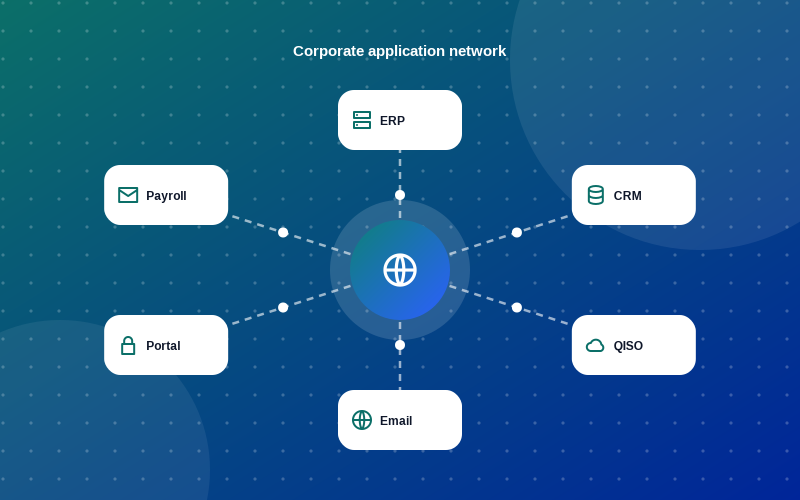
We make enterprise applications such as ERP, quality management, document management and ticketing systems work together in a single process flow, clarify which system owns which data, and deliver an integration architecture with central monitoring and operating documentation.

From siloed systems to a connected process

In many organisations purchasing runs in the ERP, document approval in a separate system and customer requests in a ticketing tool, with the links between them made through email and manual entry. We map this flow end to end, define which event triggers which system, and make the processes feel like a single flow to the user.

A single source of truth and data ownership

If the same customer, product or employee record is written differently in three systems, reports contradict each other. The first job of integration is to name the authoritative system for each data entity. Master data is kept in one place, other systems reference it, and changes propagate under defined rules. This reduces conflicts and lets you trace where a piece of information came from during an audit.

Central monitoring and a sustainable architecture

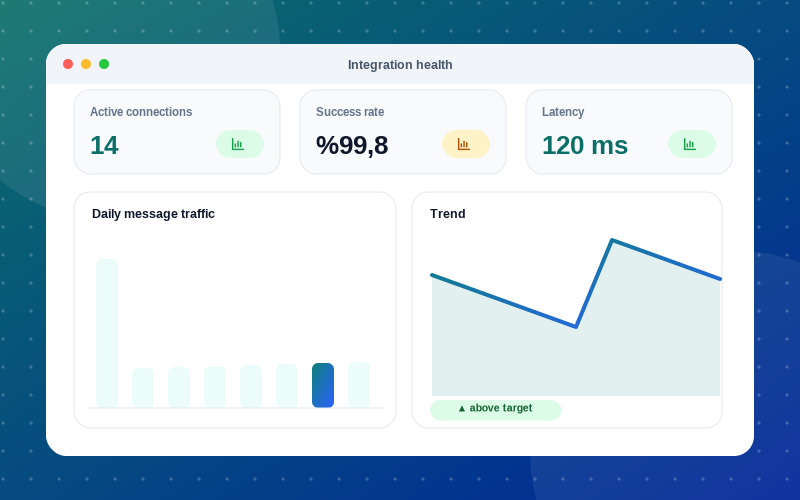
Point-to-point connections turn into an unmanageable web as the number of systems grows. Depending on need, we decouple the systems with an integration layer, a message queue or a lightweight service bus. All flows are monitored from a single dashboard, you can see at which stage a message is stuck, and updating one application does not unexpectedly break the others.

What is included?

  • Process mapping: Cross-system workflows, trigger events and responsible roles are documented and the points of manual transfer are identified.
  • Data ownership: The authoritative system and update direction are put in writing for master-data entities such as customers, products and employees.
  • Integration architecture: Direct calls, queues and service-bus options are compared and a decoupled structure suited to the scale is designed.
  • Connectors: Dependable connectors are built and tested for each application through its API, database or file interface.
  • Central monitoring: Dashboards and alerts are set up for message status, error queue and latency, together with a way to rerun a flow manually.

How we work

  1. Discovery

    Current-state analysis: In workshops with process owners we map the applications in use, the existing links between them and the manually performed steps, and jointly identify the problem points and their priority.

  2. Planning

    Target architecture and roadmap: We turn the data-ownership decisions, the chosen integration pattern and the phased rollout plan into a written document and confirm with management which flow is automated first.

  3. Implementation

    Phased implementation: We build connectors and flows one by one in order of priority, run acceptance tests with the relevant users at every stage, and compare results by running in parallel with the old manual method.

  4. Support

    Handover and sustainment: We train administrators and the support team, hand over the monitoring dashboard and the error-handling guide, and keep the integration up to date when new applications are added or versions upgraded.

What you gain

Information gaps between departments narrow, and an event in one system finds an automatic counterpart in the others.

With one authoritative source for each data entity, reports become consistent and the origin of a record can be shown during an audit.

Thanks to central monitoring, stuck flows are noticed before users complain, and adding a new application does not disturb the existing structure.

Who is it for?

This service suits mid-sized and large organisations that have used several enterprise applications independently for years, key the same information into more than one place by hand and suffer errors or delays as a result. IT directors, process owners and digital-transformation teams who want to bring quality, document, ERP and support systems together are the main audience.

Frequently Asked Questions

Which applications can you connect to each other?

Almost any enterprise application that offers at least one interface, such as an API, database, file or web service, can be connected: ERP, quality and document management, ticketing, HR, payroll and QISO systems among them. For packages with limited interfaces we check vendor permissions and licence terms beforehand and choose the most dependable route together.

Where should an integration project start?

Rather than connecting every system at once, we suggest starting with the single flow that produces the most manual work and errors. In a short discovery exercise we map the process, identify the data owner and choose a small pilot scope. The pilot results then clarify the scope and priority of subsequent flows using real data.

Related services and resources

Quote & demo

Let's evaluate your project together.

Let's start with a short call about QISO demo, ISO consulting, Artificial intelligence feasibility or your custom software needs.

  • QISO demo
  • ISO consulting
  • Artificial intelligence
  • Custom Software