

Custom Software & Enterprise Technology

API Development | Custom Software & Enterprise Technology

We develop documented, versioned and traceable APIs so your systems can communicate reliably.

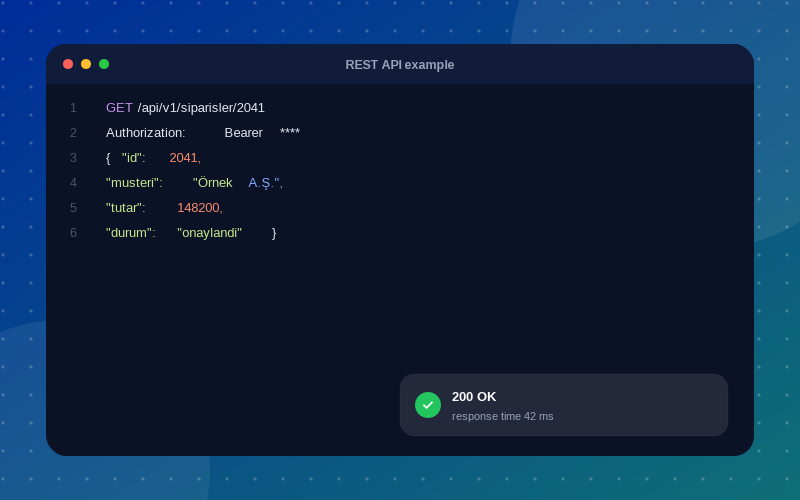
API Development – image 1
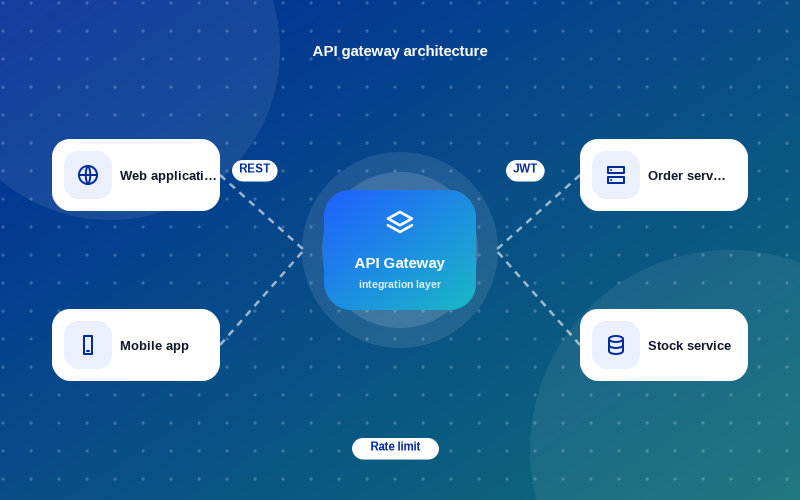
API Development – image 2

BDHA designs and builds REST-based, documented and versioned APIs so that your enterprise systems can exchange data securely with each other and with the outside world. The deliverables include the working service, OpenAPI documentation and an automated test suite.

Contract-first API design

Before any code is written, we capture resources, endpoints, error codes and data models in an OpenAPI definition. This contract lets front-end, mobile and integration teams work in parallel before the service is ready, reduces incompatibilities discovered late, and gives every consumer a shared point of reference.

Authentication, authorization and rate limiting

Because an API is a doorway to corporate data, we apply mechanisms such as OAuth 2.0, JWT or API keys according to the use case. Role-based authorization, request rate limiting, input validation and access logs reduce the risk of misuse and make it traceable which client accessed which data.

Versioning, testing and post-release monitoring

So the API can evolve without breaking existing consumers, we define a versioning strategy and automate unit and integration tests. After release, response times, error rates and usage metrics are monitored, and change and deprecation notices are managed together with the documentation, keeping the API lifecycle under control.

What is included?

  • Resource modelling: We translate business entities into resources, HTTP methods and consistent naming conventions, and agree on the approach to pagination and filtering.
  • Security: We implement OAuth 2.0 and JWT-based authentication, role-based authorization, mandatory TLS and input validation rules.
  • Rate limiting: We define per-client quotas and throttling to protect services against overload and abuse.
  • Documentation: We prepare the OpenAPI definition, sample requests and responses, and a Swagger interface or developer portal.
  • Testing and monitoring: An automated test suite, error logs and a response-time dashboard confirm that the service is running healthily.

How we work

  1. Discovery

    We review the existing systems, the parties that will consume the API and the sensitivity of the data; use cases, expected request volume and security requirements are written down to settle the scope.

  2. Planning

    The resource model, endpoints and error contract are prepared as an OpenAPI definition and reviewed with the consuming teams; the approved contract becomes the single reference for development and testing.

  3. Implementation

    The service is built iteratively together with authentication, validation rules and logging; automated tests run at every stage and results are demonstrated to stakeholders in a test environment.

  4. Support

    At go-live we hand over the deployment, a monitoring dashboard and the documentation; a support and maintenance process for version changes, error analysis and performance improvements is planned together.

What you gain

Mobile apps, web front ends and partners work against the same documented contract, which shortens integration effort and reduces misunderstandings.

Access to corporate data is controlled through authentication, authorization and logs, so it becomes auditable who accessed what.

Thanks to versioning and automated tests, API changes go live without breaking existing consumers, and maintenance cost stays predictable.

Who is it for?

This service suits organisations that want to connect several systems, feed data to a mobile or web application, or open controlled access to business partners. IT managers, product owners and software teams who want to expose data from applications such as ERP, CRM or QISO through a common layer benefit most.

Frequently Asked Questions

Can approaches other than REST, such as GraphQL or SOAP, also be used?

Our default approach is REST because it is widespread, easy to understand and well supported by tooling. If the counterpart system's constraints or the use case require it, we work with SOAP services, or evaluate other approaches for clients whose data needs vary widely. The choice is settled with its rationale during requirements analysis.

Can you improve an existing API without rewriting it from scratch?

Yes. We first review the existing API's contract, security gaps, performance bottlenecks and documentation shortfalls. We then propose gradual improvements in areas such as authentication, error handling, versioning or test coverage. If needed, we publish the new version alongside the old one so consumers have time to migrate.

Related services and resources

Quote & demo

Let's evaluate your project together.

Let's start with a short call about QISO demo, ISO consulting, Artificial intelligence feasibility or your custom software needs.

  • QISO demo
  • ISO consulting
  • Artificial intelligence
  • Custom Software