

Integration Services

SOAP Integrations | Integration Services

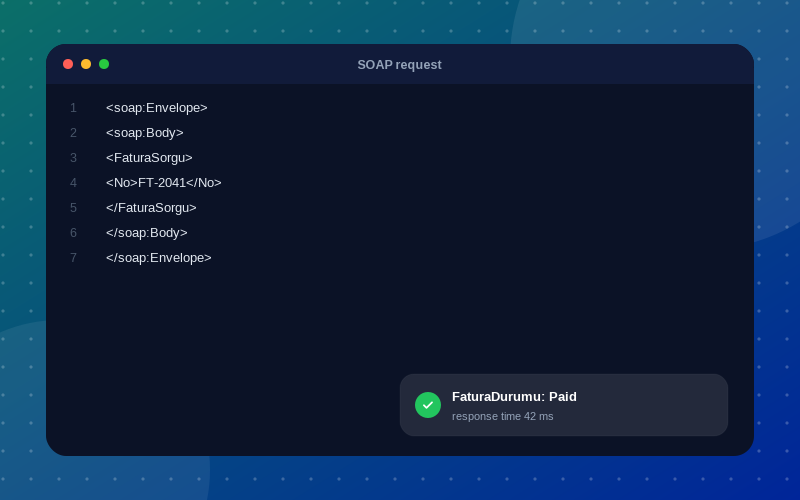
We build robust integrations with SOAP/WSDL services, which are still widespread in enterprise systems.

SOAP Integrations – image 1
SOAP Integrations – image 2

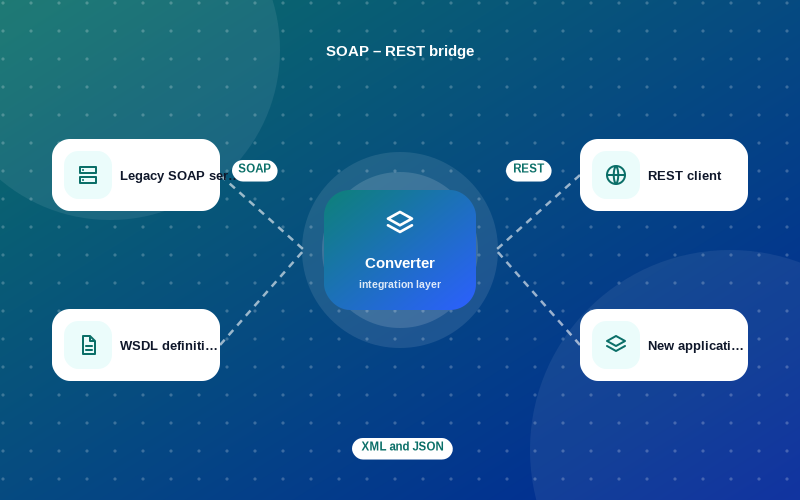
We consume and expose SOAP/WSDL services, still widespread in public bodies, banks and long-established enterprise systems, with proper security headers, certificates and timeout rules, delivering tested client code and integration documentation.

Working from the WSDL contract

The strength of SOAP services lies in a tightly defined contract expressed through WSDL and XSD. We generate client classes directly from this contract and check data types and mandatory fields at build time. Field-name mistakes and type mismatches are therefore caught before go-live, and when the contract changes, the affected code points are easy to identify.

WS-Security, certificates and signing

Enterprise SOAP services frequently require a UsernameToken, an X.509 certificate or a message signature. We produce security headers, timestamps and nonces correctly and monitor certificate chains and validity dates. We set up advance warnings for renewal dates and keep keys in a secure store, so an expired certificate does not cause an outage at midnight.

Handling faults, timeouts and SOAP Faults

Legacy systems may respond slowly, drop the connection or return a cryptic SOAP Fault. We tune timeout values per operation type, map Fault codes to business meaning and distinguish calls that are safe to retry from those that are not. For operations such as payments or orders we add checks that prevent duplicate submission.

What is included?

  • WSDL analysis: The service contract, XSD schemas, operation list and namespaces are reviewed, and the client or server skeleton is generated accordingly.
  • Security headers: UsernameToken, X.509 signature, timestamp and TLS settings are configured to the profile the service requires.
  • Certificate management: The certificate chain, renewal calendar and key-storage arrangement are defined, with an early warning set for expiry.
  • Error mapping: SOAP Fault codes are translated into business errors, and timeout, retry and duplicate-submission protection are tuned per operation.
  • Testing and monitoring: Scenario tests are written with tools such as SoapUI, message logs are kept and an alert flow is set up for failed calls.

How we work

  1. Discovery

    Contract review: We gather the WSDL files, sample requests and responses and the provider's security requirements, and plan test-environment access and certificate procurement together with the organisation concerned.

  2. Planning

    Client generation: We adapt the classes derived from the contract to your .NET or Java environment, resolve namespace clashes and legacy schema quirks, and separate them from business logic through a thin service layer.

  3. Implementation

    Security and testing: We configure certificates and headers, run successful and failing scenarios against the provider's test service, and use message logs to report problem fields to the provider with evidence.

  4. Support

    Cut-over and sustainment: We switch to the live environment in a planned window, hand over the certificate renewal calendar and operating notes, and support adaptation when the provider changes the contract.

What you gain

Legacy or public-sector SOAP services connect to your system without rewrites and without interruption.

Unexpected outages caused by certificates and security headers are avoided through a calendar and alerts set up in advance.

Message logs and test scenarios enable fast, evidence-based resolution when disagreements with the provider arise.

Who is it for?

This service suits organisations that must exchange data with public services, banks or e-government-style platforms, businesses that rely on a long-running SOAP-based ERP or business application, and IT teams who want to connect those services to modern applications. It adds particular value where documentation is thin and certificates are required.

Frequently Asked Questions

Can we not simply use REST instead of SOAP?

The decision depends on the interface the other party offers. Many public bodies, banks and older ERP systems expose only SOAP, so the protocol is not yours to choose. If you are designing your own service, REST is lighter in most cases, although requirements such as WS-Security can justify SOAP. We give a neutral recommendation based on your needs.

Will the integration stop if our certificate expires?

Yes, an expired certificate causes calls to be rejected. That is why the delivery includes a certificate inventory and a renewal calendar, and we raise warnings weeks before the expiry date. We document the renewal procedure step by step with the provider so that your team can carry it out on its own when needed.

Related services and resources

Quote & demo

Let's evaluate your project together.

Let's start with a short call about QISO demo, ISO consulting, Artificial intelligence feasibility or your custom software needs.

  • QISO demo
  • ISO consulting
  • Artificial intelligence
  • Custom Software